More than 129 million girls in Sub-Saharan Africa are not in school, which is a problem that affects whole communities. We are changing the lives of one girl at a time at GirlsEducationImpact. We think that every girl should have the chance to learn, lead, and shape her own future.
The SaGG Foundation (Support a Gambian Girl) is a nonprofit group that works to improve educational opportunities for girls and young women in The Gambia. No matter what their social or economic background is, we think every girl should have the chance to learn, grow, and make her own future.
We help girls stay in school, finish their education, and get jobs that help their families and communities through scholarships, mentorship programs, and advocacy. Not only does our work change people’s lives, but it also gives power to whole generations.
We made this website as part of our digital outreach campaign, GirlsEducationImpact, to get the word out, share success stories, and get people to support girls’ education in Sub-Saharan Africa.
Our Initiative Mission
GirlsEducationImpact’s goal is to make people more aware of the problems girls in Sub-Saharan Africa face in getting an education. One girl at a time, we want to tell real stories, get people to act, and push for change.
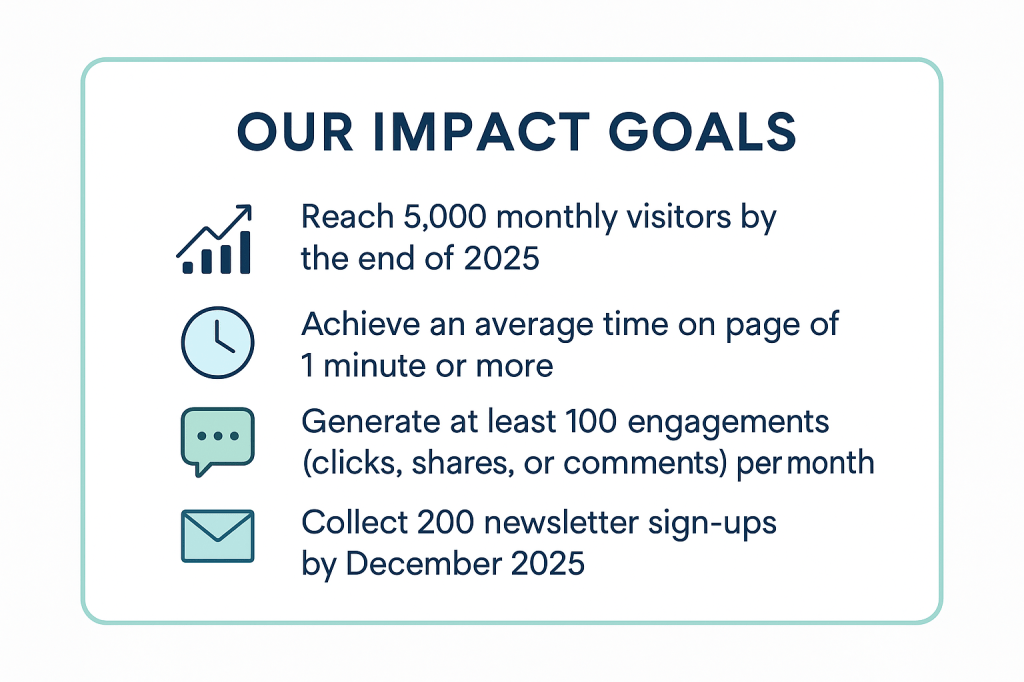
Our Goals for Impact
📈 By the end of 2025, have 5,000 visitors a month
⏱️ Get an average time on page of 1 minute or more
💬 Get at least 100 interactions (clicks, shares, or comments) each month
📬 Get 200 people to sign up for your newsletter by December 2025.
Our Impact
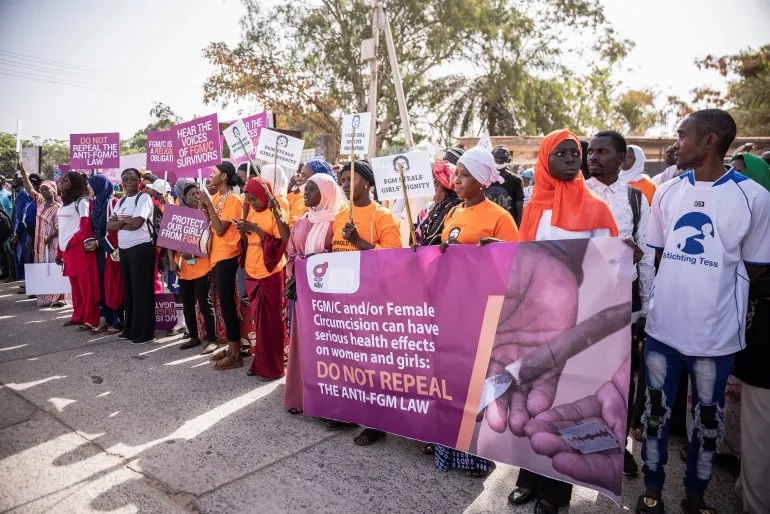
Watch this short video from @saggfoundation to understand the challenges girls face daily — and how communities are fighting back in real time. You can read our latest impact stories in the Stories of Change section.
Concerning Trends in The Gambia: Girls’ Education at Risk. This video highlights the challenges too many girls still face when trying to access education in The Gambia — from early marriage to lack of resources. Every girl deserves a chance to learn. Visit our website to learn more and see how you can help make a difference. Like, comment, and share to raise awareness and be part of the movement for change. Together, we can turn the tide. #GirlsEducation#LetGirlsLearn#GirlsDeserveBetter#MakeADifference#FYP
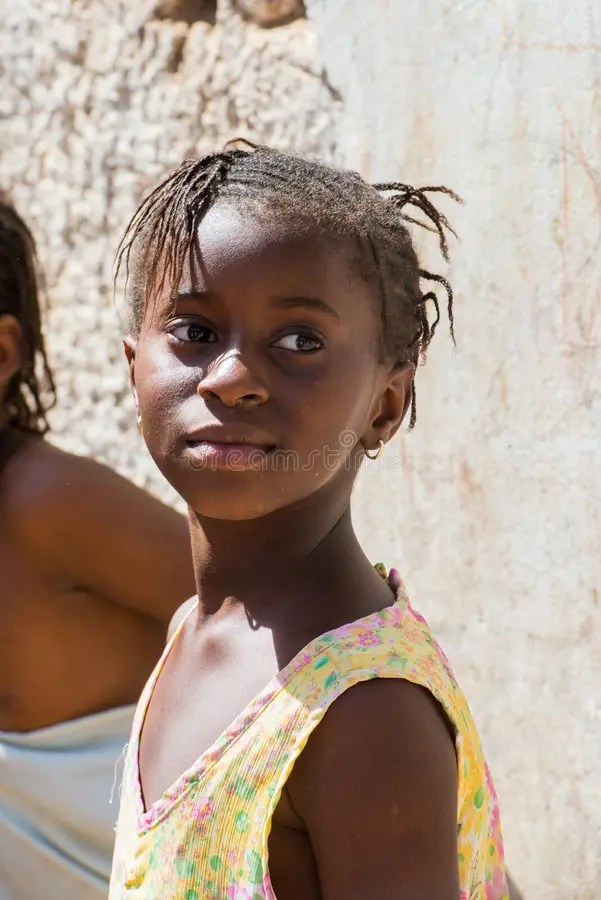
Meet a bright and ambitious young girl from The Gambia. With the support of the SaGG Foundation, she’s been able to pursue her dreams of a higher education and create a bright future for herself. If you want to learn more about the incredible work the SaGG Foundation does and how we support young people, visit our website. The link’s in bio! Your likes and comments mean so much – share your thoughts below! #EmpoweredGirl#Education#SupportGirlsEducation#SaGGFoundation#FYP
In a lot of places in Sub-Saharan Africa, social norms and traditions still put boys’ education ahead of girls’. Families may not want girls to go to school because they think their future is in domestic work or getting married young. These deeply ingrained ideas about gender make it less likely that girls will finish even primary school (Melesse et al., 2020).
Child marriage is still a big problem. Girls often stop going to school for good after they get married. Also, many teenage girls get pregnant early because they don’t have access to sexual and reproductive health education. This makes it even harder for them to get an education (Ninsiima et al., 2021; Melesse et al., 2020).
Even in places where there are schools, the costs of school uniforms, books, transportation, and school fees are often too high. Families with little money are more likely to send their sons to school because they think it’s a better investment. This lack of access to money keeps girls in a cycle of poverty and low literacy (Bangura et al., 2020).
A girl’s access to health care also affects her education. Girls may stay home or drop out of school if there aren’t enough places to keep their menstrual hygiene, if there isn’t enough counseling, or if the staff isn’t trained. Many school systems don’t have health and emotional support services that are good for kids (Ninsiima et al., 2021).
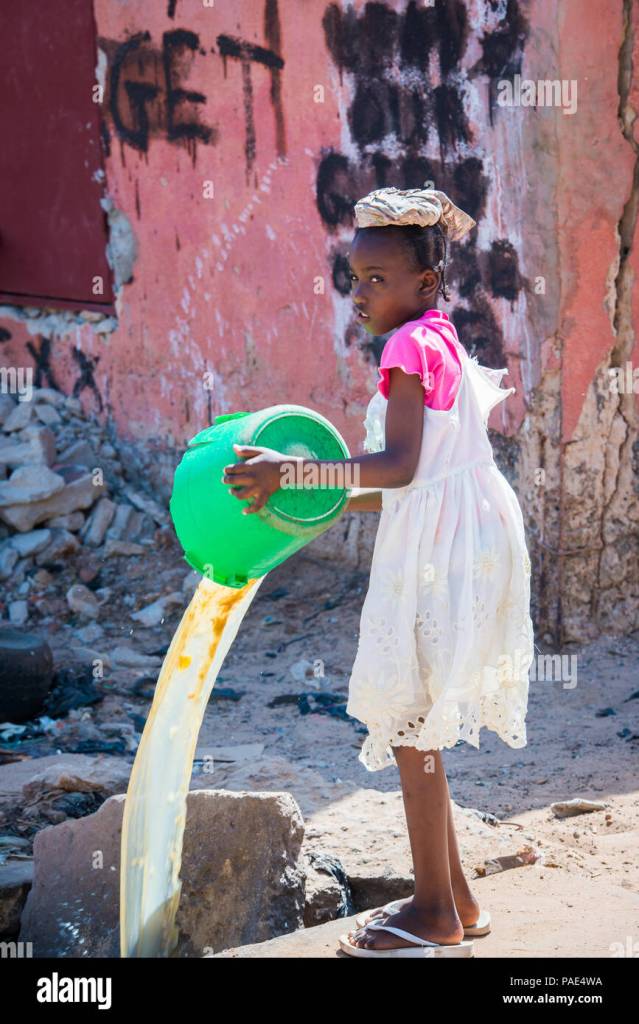
Girls who live in remote rural areas have even more problems: they have to travel farther, there aren’t as many schools, and there isn’t as much public transportation. Even if girls want to go, it’s almost impossible because of safety concerns and bad infrastructure (Melesse et al., 2020).
Girls who finish school are more likely to wait to get married, make more money, and have healthier kids. According to Evans and Yuan (2020), every extra year of school can increase a girl’s future income by as much as 20%.
The girl gets more than just an education; it also helps everyone in her family and community. The World Bank says that if all girls got 12 years of schooling, the world’s GDP could go up by as much as $15 trillion (World Bank, 2018).
Girls who get more education are healthier, and so are their families.
A girl who finishes high school is twice as likely to use birth control (Ninsiima et al., 2021)
50% less likely to get pregnant by accident
More likely to get medical help for herself and her kids
Vaccination rates are higher among educated mothers, which is good for the health of the whole community (Bangura et al., 2020). When you invest in both education and health, you get a lot of benefits from one investment.
In rural areas, the problems that keep girls from going to school often get worse:
Long distances to walk
Not enough bathrooms
Not many qualified female teachers
Cultural resistance to going to school
Girls in rural Sub-Saharan Africa are twice as likely to drop out of school as girls in cities (World Bank, 2018).
To solve this, new ideas like solar backpacks, mobile classrooms, and radio-based education have worked. To close the opportunity gap, governments and NGOs need to make rural education a top priority.
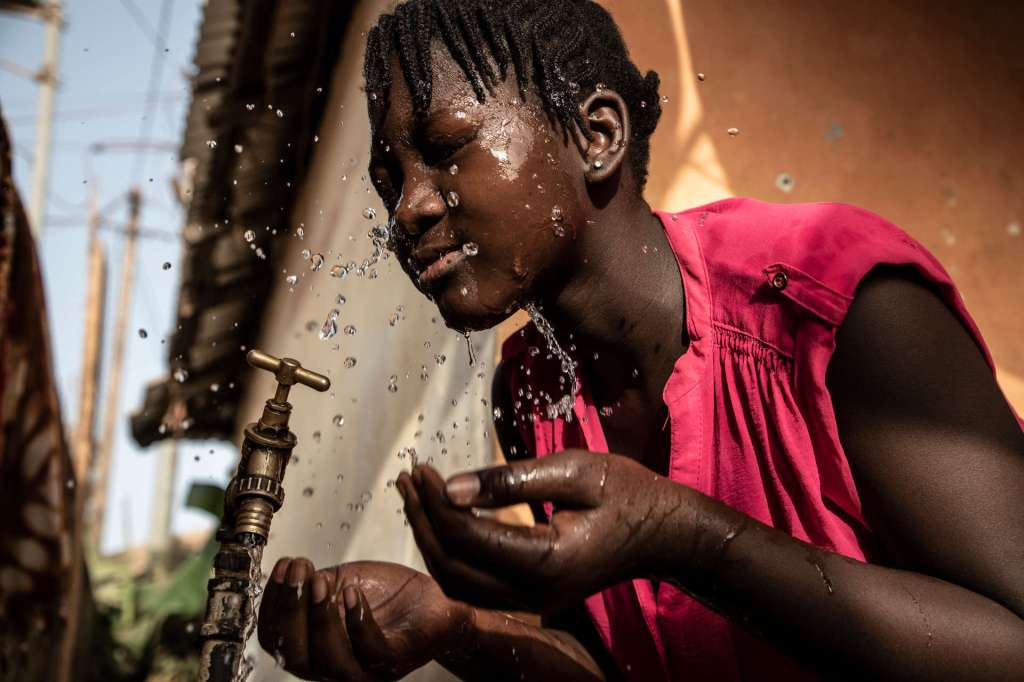
14 year old Ya Nima Jaiteh washes her face at a tap in her family’s compound in the densely populated village of Bakau, The Gambia where nitrate has been found in the water supply by PURA inspectors. Nitrate can occur due to contamination into boreholes from soakaways / pit latrines being, and from fertilizers.
Consent from mother – Fatou Conteh
+2207898991
Many people think of digital tools as luxuries, but they are becoming necessary for education that includes everyone.
In places like The Gambia:
Girls learn through WhatsApp, radio, and community tablets.
Teachers record lessons in audio format so that they can be played back later.
Solar-powered radios send full lessons to homes that are far away.
These new ideas were helpful during the COVID-19 pandemic and are still helpful for floods, wars, or any other kind of disruption (Evans et al., 2020). Giving girls access to digital tools isn’t a new idea; it’s a basic one.
Ayeleru, O.O., et al., 2020. Challenges of plastic waste generation and management in sub-Saharan Africa: A review. Waste Management, 110, pp.24–42.
Barasa, E., et al., 2021. Examining the level and inequality in health insurance coverage in 36 sub-Saharan African countries. BMJ Global Health, 6(1), pp.1–12.
Evans, D.K. and Yuan, F., 2020. What are we learning about improving learning? Journal of African Economies, 29(1), pp.47–65.
GirlsEducationImpact, 2025. We adapt because girls need us to. GirlsEducationImpact Blog, [no issue number].
Giller, K.E., 2020. The food security conundrum of Sub-Saharan Africa. Global Food Security, 26, p.100365.
Hilson, G., et al., 2020. Artisanal and small-scale mining and the Sustainable Development Goals: Opportunities and new directions for Sub-Saharan Africa. Geoforum, 111, pp.138–145.
Lyons, A.C., Kass-Hanna, J., et al., 2020. Building financial resilience through financial and digital literacy in South Asia and Sub-Saharan Africa. Financial Literacy eJournal, 7(2), pp.99–112.
McCormack, V., et al., 2020. Breast cancer survival and survival gap apportionment in Sub-Saharan Africa (ABC-DO): a prospective cohort study. The Lancet Global Health, 8(9), pp.e1203–e1211.
Melesse, D.Y., Mutua, M.K., Ayele, W., et al., 2020. Adolescent sexual and reproductive health in sub-Saharan Africa: who is left behind? BMJ Global Health, 5(1), pp.1–9.
Mitchell, D., et al., 2020. Inclusive education in Tanzania: What really works in special and inclusive education. Routledge.
Muluneh, M.D., et al., 2020. Gender-based violence against women in Sub-Saharan Africa: A systematic review and meta-analysis. International Journal of Environmental Research and Public Health, 17(3), pp.1–20.
Ninsiima, L.R., et al., 2021. Factors influencing access to and utilisation of youth-friendly sexual and reproductive health services in sub-Saharan Africa: A systematic review. Reproductive Health, 18(1), pp.1–12.
Ogunniyi, A., et al., 2020. Governance quality, remittances and their implications for food and nutrition security in Sub-Saharan Africa. World Development, 127, p.104739.
Sarkodie, S.A. and Strezov, V., 2020. Electricity access, human development index, governance and income inequality in Sub-Saharan Africa. Energy Reports, 6, pp.455–466.
Wudil, A.M., et al., 2022. Reversing years for global food security: A review of the food security situation in Sub-Saharan Africa. International Journal of Environmental Research and Public Health, 19(4), pp.1–22.



 GirlsEducationImpact
Leave a comment